











Pioneering Augmented Reality UX/UI Design


Augmented Reality (AR) is transforming the world of user experience (UX) and user interface (UI) design. Create immersive and intuitive AR applications with our cutting-edge UX/UI design techniques.

The Importance of UX/UI Design in AR

AR Interaction

In the realm of augmented reality, UX/UI design is not only about aesthetics but also about fostering a seamless interaction between the user and the digital world. Effective UX/UI design in AR is essential to ensure that users find the application intuitive, responsive, and accessible. This leads to a memorable user experience that encourages longer engagement and repeat usage.

The unique challenges of AR, such as spatial navigation and the integration of virtual elements with the real world, require innovative solutions. UX/UI designers specializing in AR must understand the user's physical environment and how to enhance it with digital overlays without overwhelming or distracting the user. By incorporating user feedback and usability testing into the design process, AR UX/UI designers can refine the user experience to be as immersive and natural as possible. This user-centric approach is the key to creating AR applications that resonate with target audiences and succeed in the competitive market.

Designing for a 3D World

Unlike traditional screen-based interfaces, AR UX/UI design requires consideration of three-dimensional space. Designers must craft experiences that are spatially aware, leveraging depth perception and motion to guide users through the AR environment. This requires a thorough understanding of ergonomics and environmental context.

The use of 3D models and animations has to be purposeful and enhance the user's understanding of the application. Design elements must be positioned and scaled within the AR space to provide optimal visibility and interactivity, avoiding clutter and promoting a clear path for navigation. Lighting and shadows play a crucial role in grounding virtual objects in the real world, which helps to create a more believable and engaging AR experience. Designers must carefully consider the interplay between virtual and physical light sources to achieve a harmonious blend.

User-Centered Interaction Design

Engagement is central to the success of any AR application. UX/UI designers must focus on interaction design to keep the user's journey through the AR experience enjoyable and intuitive. This includes the implementation of gestures, voice commands, and other input methods that feel natural to the user.

Personalization options and adaptive interfaces further enhance the user experience by catering to individual preferences and abilities. This level of consideration can significantly increase user satisfaction and loyalty. Feedback mechanisms such as haptic responses and sound cues are invaluable in AR environments, where visual attention may be split between virtual and real elements. These cues provide immediate and intuitive guidance to the user, ensuring a smooth interaction flow.

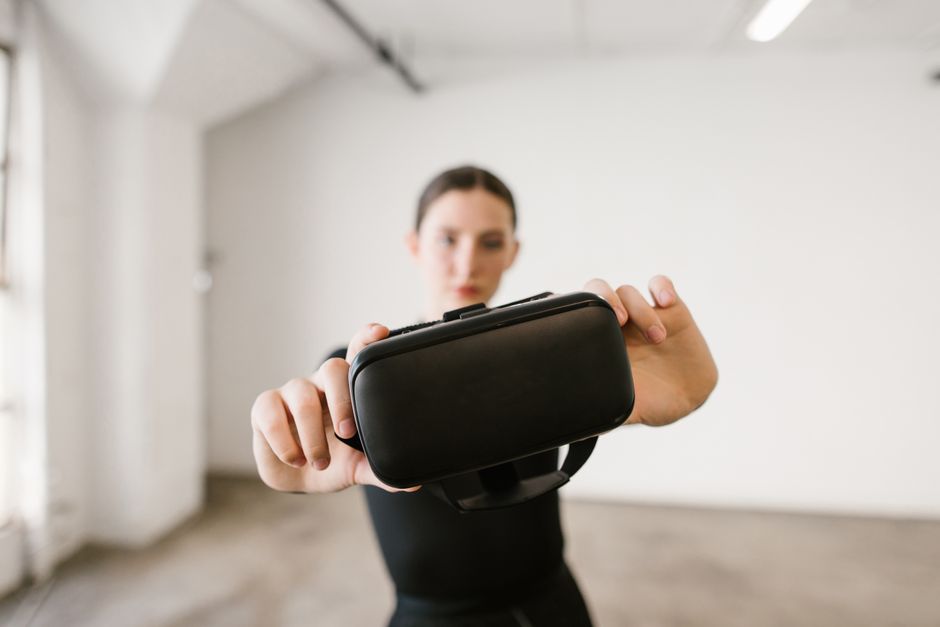
A woman holds a virtual reality headset with a blurred background, enhancing focus on the device.
Photo by RDNE Stock project from Pexels.

Future-Proofing AR Experiences

As augmented reality technology continues to advance, UX/UI designs must evolve accordingly to accommodate new capabilities and higher user expectations. Staying updated with the latest AR trends and incorporating flexible design frameworks ensures that applications remain relevant and ahead of the curve.

Proactively considering accessibility and usability standards is another aspect of future-proofing AR experiences. This ensures that AR applications are inclusive and can reach a wider audience, as well as comply with regulatory guidelines. Scalability is critical for AR applications, as they often need to be adapted for various devices and platforms. A well-designed UX/UI must translate seamlessly across different hardware, maintaining consistent quality and performance.

Our AR UX/UI Design Services

Our team of experts specializes in creating custom AR experiences that captivate and engage. From the initial concept to the final deployment, we work closely with clients to ensure that every aspect of the UX/UI design is tailored to their specific goals and target audiences.

An anonymous individual holding a blank black frame, perfect for art or photo mockups.
Photo by cottonbro studio from Pexels.

Custom AR Experience Design

Our team of experts specializes in creating custom AR experiences that captivate and engage. From the initial concept to the final deployment, we work closely with clients to ensure that every aspect of the UX/UI design is tailored to their specific goals and target audiences.

Interactive Prototyping

Prototyping is an integral part of our AR design process. We build interactive prototypes to test and refine the UX/UI elements, ensuring the design is both practical and delightful to use. This iterative approach is vital for creating AR applications that truly resonate with users.

A dark and artistic three-tier wedding cake with roses and greenery, perfect for a gothic theme.
Photo by Kasonya Wilcox from Pexels.
Laboratory technician writing report with samples in a medical lab.
Photo by Pixabay from Pexels.

Usability Testing & Evaluation

We are committed to excellence in AR design and this commitment extends to rigorous usability testing and evaluation. Our approach to user testing is comprehensive, aiming to pinpoint any usability issues and quickly iterate to enhance the overall experience.

Don't settle for just any design team - excel with bespoke AR UX/UI solutions. Discover what our satisfied clients have experienced.

FYC and Its Innovative Solutions Featured In

Connect With Us!